
I see this scenario almost every week.
A patient comes in with tooth pain.
It hurts. Then it settles.
The swelling goes down.
Life gets busy.
And the root canal… quietly gets postponed.
If that sounds familiar, you’re not alone. Many people assume that when tooth pain disappears, the issue has politely packed up and left. Unfortunately, teeth don’t work that way. This blog explains what happens if you don’t get a root canal, even when it is needed.
No scare tactics. Just clear, honest information so you can make a calm, confident decision.
TLDR – Key Takeaways
- If you don’t get a root canal in time, the infection does not go away; it spreads.
- Pain may stop temporarily, but that usually means the nerve has died, not that the tooth has healed.
- Delaying treatment increases the risk of abscess, bone loss, and tooth extraction.
- A root canal saves the natural tooth; waiting may remove that option completely.
- Early treatment is simpler, more predictable, and often less costly long-term.
What Are the Signs You Might Need a Root Canal?
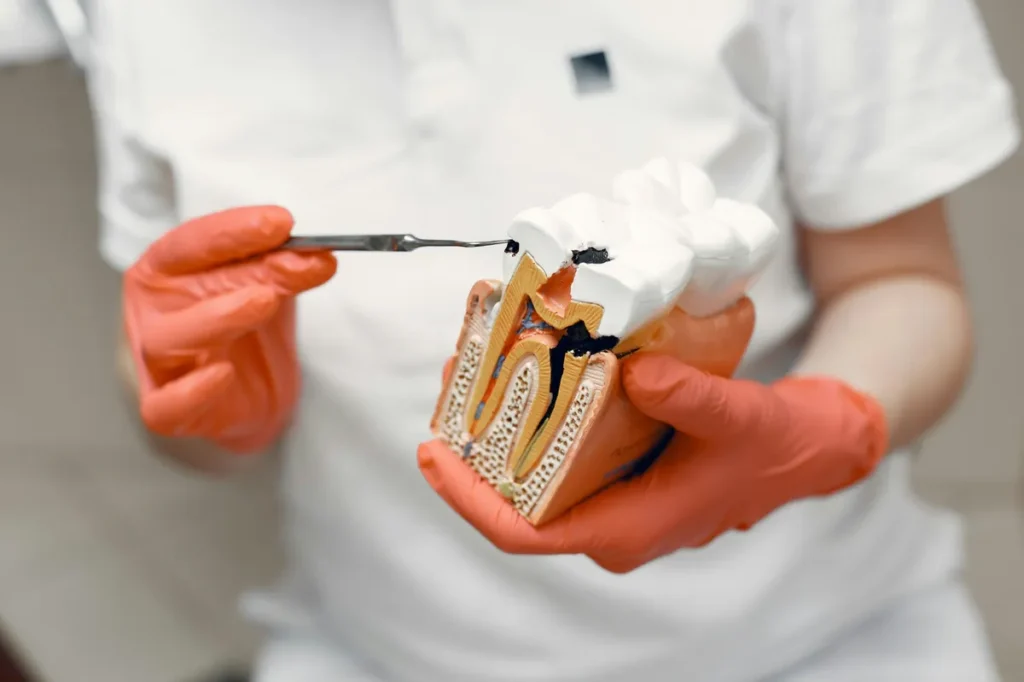
A root canal is usually recommended when the nerve inside a tooth is infected or inflamed, and your tooth has a few very specific ways of warning you.
- Persistent tooth pain:
Pain that lingers, throbs, or returns repeatedly is often a sign of nerve involvement.
- Sensitivity to hot or cold:
If the sensation lasts even after the temperature is gone, the pulp may be damaged.
- Pain when biting or chewing:
Discomfort under pressure can indicate infection around the tooth’s root.
- Swelling of the gums or face:
Swelling often means the infection has spread beyond the tooth.
- A pimple-like bump on the gums:
This can be a draining abscess, your body’s way of releasing infection.
- Darkening or discolouration of the tooth:
A grey or dark tooth may indicate a dying or dead nerve inside.
- Pain that comes and goes:
Temporary relief doesn’t mean healing; it often means the nerve is breaking down.
If this list feels a little too relatable, it’s worth getting it checked sooner rather than later.
To learn more, check out our article on “How to Know If You Need a Root Canal”.
Why a Dentist Recommends a Root Canal in the First Place
A root canal is recommended when the pulp inside the tooth becomes infected or inflamed due to deep decay, cracks, trauma, or repeated dental procedures.
The pulp contains nerves and blood vessels. Once bacteria reach this area, fillings and antibiotics alone cannot eliminate the infection. The goal of root canal treatment is to remove the infected tissue, disinfect the canals, and seal the tooth, allowing it to function normally again.
What Happens If You Delay or Avoid a Root Canal Treatment
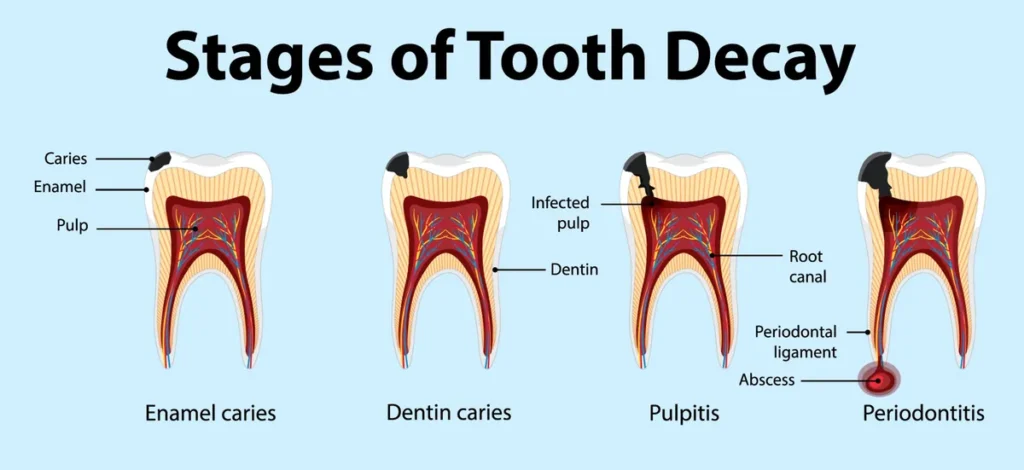
This is where things quietly go from “manageable” to “why didn’t I do this earlier?”
When patients ask me what happens if you don’t get a root canal in time, I explain it like this: the tooth doesn’t forget, even if the pain does.
Step 1: Infection Starts Inside the Tooth
Bacteria enter the pulp due to deep decay, cracks, or trauma. This is usually when you need a root canal, but you may not realise it.
Step 2: Pressure and Pain Build Up
Inflammation increases inside a rigid tooth, which is why early root canal pain can feel sharp, throbbing, or impossible to ignore.
Step 3: The Nerve Dies (And the Pain “Disappears”)
This is the dangerous calm. When patients ask what happens if you don’t do a root canal, this is the moment that tricks them; less pain doesn’t mean less infection.
Step 4: Infection Spreads Beyond the Tooth
Bacteria travel through the root tip into the jawbone, turning a local problem into a bigger one, often silently.
Step 5: Abscess Formation
Pus builds up. Swelling appears. Faces puff up. Sleep becomes difficult. This is when people realise delaying a root canal wasn’t the money-saving move.
Step 6: The Tooth Can No Longer Be Saved
At this stage, the question is no longer root canal vs extraction.
Extraction becomes the only predictable option.
And yes, this is usually when patients say,
“Doctor… can we still save it?”
And I wish the answer could be yes.
Teeth rarely heal by being ignored; they just get quieter.
If you’ve been putting this off, now’s a good time to get clarity.
Does the Pain Ever Go Away on Its Own?
Yes. And that’s exactly where people get fooled.
Tooth pain can disappear when the nerve inside the tooth dies. Patients often think, “Great! problem solved.”
In reality, the infection hasn’t gone anywhere. It just stopped knocking loudly.
The bacteria continue spreading quietly into the jawbone and surrounding tissues; no pain, no warning, no mercy.
In simple terms:
No pain does not mean no problem.
It usually means the problem has gone undercover.
Risks of Not Getting a Root Canal in Time
Ignoring a needed root canal doesn’t make the problem disappear.
It simply gives the bacteria more confidence and may lead to:
Dental Abscess:
This is an infection with attitude. Pus builds up, swelling appears, and pain can return with interest, often along with fever and facial tenderness.
Jawbone Infection:
Once bacteria move beyond the tooth, they start attacking the bone that holds it in place. At this stage, the tooth may feel loose, and saving it becomes far more difficult.
Tooth Loss:
When infection destroys enough bone or structure, the tooth is no longer salvageable. Extraction becomes the only realistic option, even if a root canal could have helped earlier.
Spread of Infection:
In rare but serious cases, dental infections can spread to the sinuses or bloodstream. Always remember, teeth are small, but infections are not.
Delaying a root canal doesn’t pause the problem.
It lets the problem level up.
When a Root Canal Is No Longer Enough
This is the part no one likes hearing, including me.
A root canal is designed to save a tooth.
But if treatment is delayed too long, there comes a point where saving it is no longer possible.
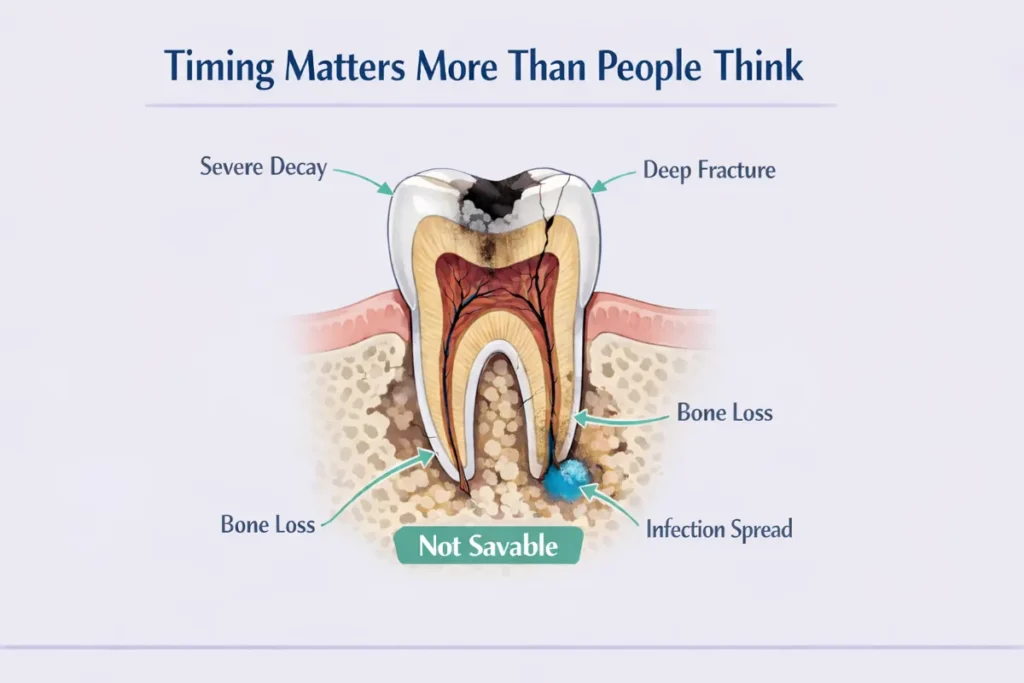
A root canal may no longer be an option when:
- There isn’t enough healthy tooth left to support a filling or crown
- Infection has caused significant bone loss, leaving the tooth unstable
- Vertical root fractures are present (these are the deal-breakers)
- Repeated delays allow the infection to spread beyond repair
This is often what happens if you need a root canal and don’t get one in time.
At this stage, extraction becomes the only reliable solution, not because dentists prefer it, but because biology does.
And once a tooth is removed, replacement options are usually more complex, more expensive, and far less exciting than keeping the original.
When Should You See a Dentist Immediately?
Some symptoms are your tooth’s way of saying,
“Please stop Googling and come see a dentist.”
Do not wait if you notice any of the following:
- Facial or gum swelling — especially if it’s getting bigger, firmer, or tender
- Fever along with tooth pain — your body is telling you this isn’t just a tooth issue anymore
- Difficulty chewing or opening your mouth — pain should not interfere with basic life skills
- A recurring gum boil or pimple — that’s an infection finding an escape route
- Pain that wakes you up at night — teeth should not have the power to interrupt sleep
These are warning signs that an infection may be spreading.
Waiting does not make things simpler; it usually makes them even more complicated.
Getting the Right Care for a Root Canal in Singapore

Root canal treatment today is far less dramatic than its reputation suggests.
When done properly, it’s comfortable, predictable, and very good at saving teeth.
What really makes the difference isn’t luck, it’s experience and precision:
- An accurate diagnosis (no guessing games)
- Thorough cleaning and infection control
- Proper sealing and restoration
- A dentist who genuinely wants to save your natural tooth, not rush to remove it
I’ve been practising for over 27 years and have treated 10,000+ patients, including plenty who walked in saying, “I really don’t like dentists.” That’s okay, my job isn’t to judge, it’s to make the experience calm, clear, and as comfortable as possible.
Tooth-saving, when it’s clinically right, is always the goal.
If you’re unsure whether you truly need a root canal or worried you may have waited too long, let’s have a simple, pressure-free conversation.
Clear answers early often save teeth, time, and unnecessary stress.
FAQs
How long can I go without a root canal?
There is no safe waiting period for a root canal. Dental infections progress at different speeds, but delaying treatment always increases the risk of pain, bone damage, and tooth loss.
If you’re unsure whether your symptoms can wait or you need urgent care, Book an Appointment Now.
At what point is it too late for a root canal?
It is too late for a root canal when infection causes severe bone loss, deep fractures, or structural instability.
How long will antibiotics delay a root canal?
Antibiotics do not delay the need for a root canal. They may reduce symptoms temporarily, but cannot remove the infection inside the tooth.
Can a tooth heal itself without a root canal?
No. Once the dental pulp is infected, a tooth cannot heal itself. The infection must be removed with a root canal, or the tooth will continue to deteriorate.
Can delaying a root canal lead to loss of the affected tooth?
Yes. Delaying a root canal increases the risk of tooth loss by allowing infection to weaken the tooth structure and destroy supporting bone.
Can delaying a root canal affect adjacent teeth?
Yes, untreated infection can spread from the affected tooth into the surrounding bone and adjacent teeth, increasing the extent of damage.

Dr. Prashanth Kanakamedala (BDS, MDS) is a Senior Dentist in Singapore with over 27 years of experience across the UK, Australia, and Singapore. Trusted by 8,500+ patients, he’s known for his gentle approach and dedication to helping every patient achieve a healthy, confident smile.