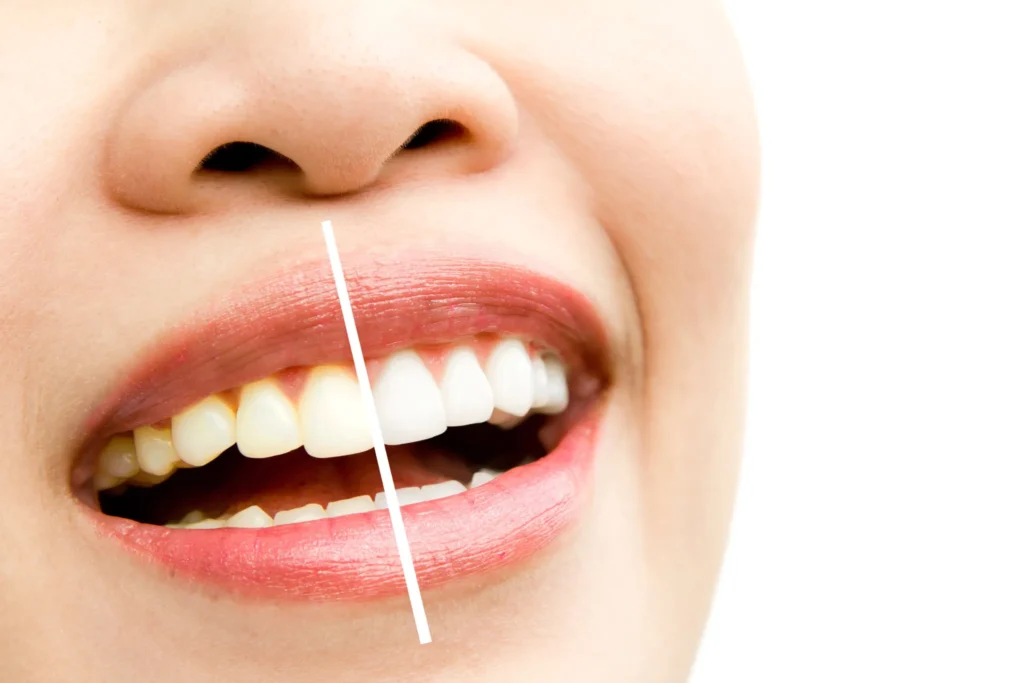
Coffee. Tea. Red wine. Smoking. Ageing.
If your teeth look more off-white than bright white, relax; this is extremely common in adults and not a sign of poor hygiene.
Yes, yellow teeth can be whitened safely and effectively in most cases.
The results depend on what type of stain you have and how you try to remove it, not on how aggressively you scrub or how convincing the packaging looks.
This guide explains what actually works, what doesn’t, and when professional help makes sense; with clear, practical advice and zero miracle promises.
TL;DR – Key Takeaways
- Most yellow teeth can be whitened, but results depend on the stain type.
- Surface stains respond well to polishing and whitening.
- Deep internal stains need professional assessment.
- DIY hacks can damage enamel if overused.
- Professional teeth whitening is the safest, most predictable option.
- Whitening lasts longer with good habits and maintenance.
Why Do Teeth Turn Yellow?
Think of your teeth like a white shirt you wear every day.
Even with good care, it’s going to pick up colour over time. Teeth are no different.
Yellow teeth don’t happen overnight, and they’re rarely a sign of poor hygiene. They’re usually the result of everyday habits plus how teeth are built.
Common reasons teeth turn yellow include:
1. Enamel thinning with age:
As we get older, the outer white enamel naturally wears down, allowing the yellower dentin underneath to show through. This is one of the most common reasons adults notice yellowing.
2. Coffee, tea, wine, and dark foods:
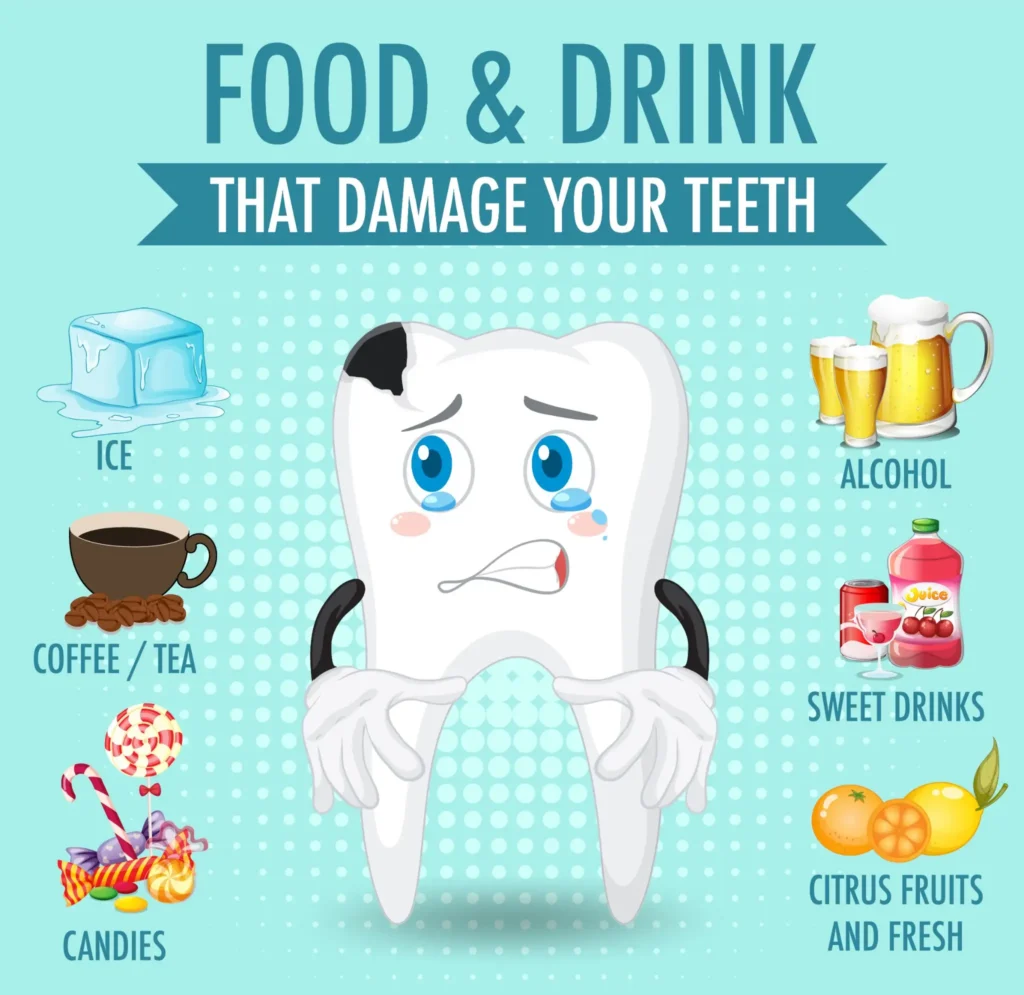
These are the usual suspects when people ask how to remove yellow stains from teeth. Pigments from these foods cling to enamel and gradually build up.
3. Smoking or vaping:
Nicotine stains are persistent and excellent at undoing whitening efforts quickly.
4. Genetics:
Some people naturally have thinner enamel, which makes teeth look more yellow, even with excellent oral care.
5. Certain medications:
Medications, especially those taken during tooth development, which can affect colour from the inside.
Yellowing is normal.
It’s not a brushing problem; it’s a combination of biology, lifestyle, and time.
Types of Tooth Stains (And Which Can Be Removed)
Not all yellow stains on teeth are created equal.
Some sit politely on the surface. Others move in, unpack, and refuse to leave without professional help.
Understanding what kind of stain you have is the first step in knowing how to remove stains from teeth and whether whitening will actually work.
Here’s a simple breakdown 👇
| Stain Type | What Causes It | Can It be Removed? |
| Extrinsic stains | Coffee, tea, red wine, smoking, dark foods | Yes, Very often |
| Intrinsic stains | Ageing, medications, trauma, developmental changes | Sometimes |
| Age-related stains | Combination of enamel thinning + internal yellowing | Usually yes, with the right method |
| Restoration colour mismatch | Crowns, veneers, fillings | No |
What this means for you:
If your yellow stains are on the surface, they’re usually easy to remove with the right method. If they’re inside the tooth, whitening can still help, but results depend on the stain type, not how aggressive the product is.
In short, the best way to remove stains from teeth isn’t stronger whitening; it’s the right approach for your stain.
Best Ways to Remove Yellow Stains From Teeth at Home
Some yellow stains on teeth can be improved at home if you use the right methods and don’t overdo it.
- Whitening toothpaste: They can help reduce mild, surface-level stains, but they won’t change your natural tooth colour. Think upkeep, not miracles.
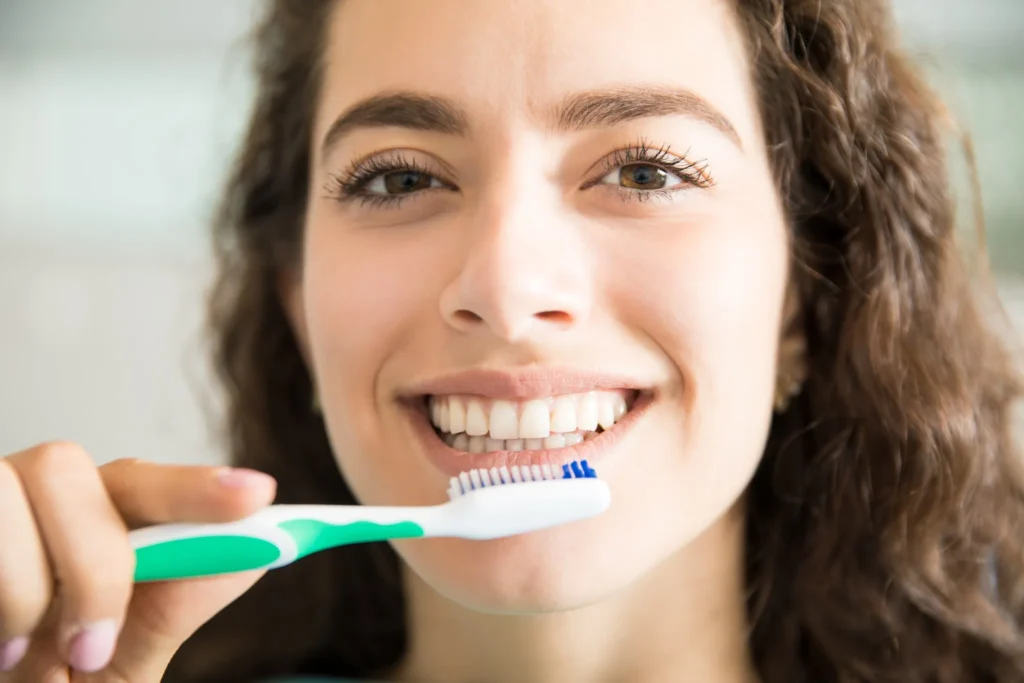
- Dentist-supervised home whitening trays: These are the most reliable at-home option. They’re stronger than over-the-counter kits, customised to your teeth, and far more predictable, which is why many dentists recommend them.
Further Reading: Do Teeth Whitening Trays from the Dentist Work?
- Over-the-counter strips and kits: These may work for light staining, but results are inconsistent, and sensitivity is common.
A quick warning: Viral hacks like lemon, baking soda, or charcoal can damage enamel and make staining worse over time. Your teeth deserve better than internet experiments.
If you’re wondering how to remove yellow stains from teeth safely, home care can help, but the method matters as much as the product.
How Dentists Remove Yellow Stains From Teeth
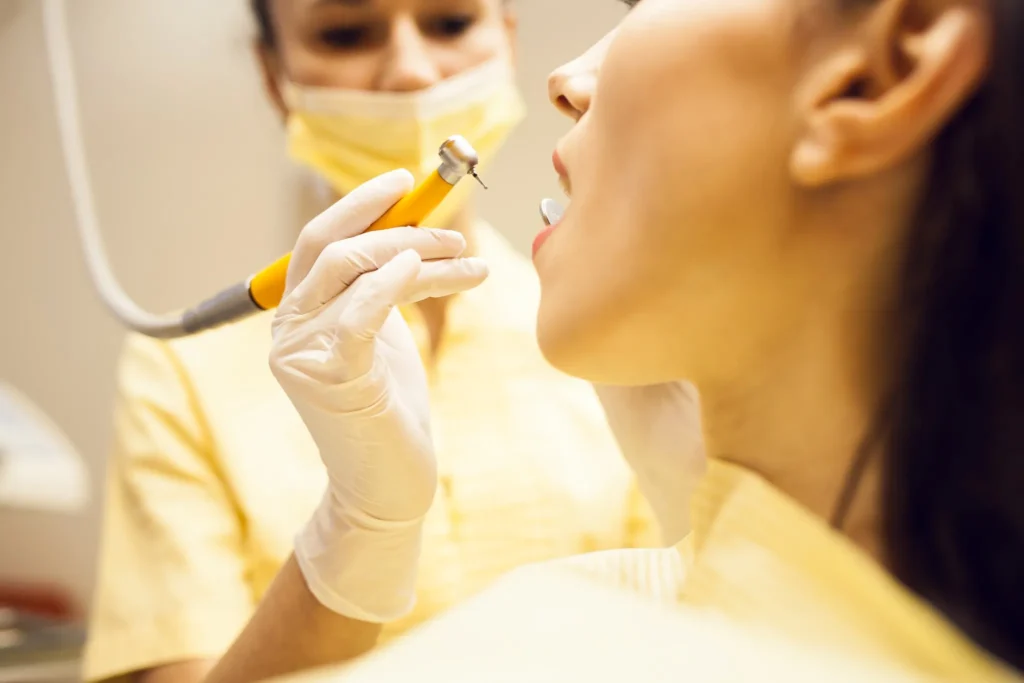
When home methods hit their limit, this is where professional care steps in; calmly, safely, and without guesswork.
Here’s what typically happens during a professional whitening visit:
Step 1: Examination first
We will check the type of stains, existing dental work, and sensitivity history. This decides how your yellow teeth can be whitened and how far we should go.
Step 2: Scaling and polishing
Surface stains from coffee, tea, or smoking are removed with professional cleaning. Many patients notice an immediate brightness boost right here.
Step 3: In-clinic teeth whitening (if suitable)
A controlled whitening gel is applied and activated under supervision. This targets deeper stains safely and evenly, with no patchy results or surprise sensitivity.
Step 4: Aftercare guidance:
You’ll get clear advice on managing sensitivity, maintaining results, and keeping stains from returning.
The advantage of dentist-led whitening isn’t just speed, it’s knowing what will work, what won’t, and what’s safest for your teeth.
Still wondering whether toothpaste and strips are enough or if professional teeth whitening would actually make a difference?
A quick consultation can tell you how to remove yellow stains from teeth safely, what results you can realistically expect, and what’s better left on the pharmacy shelf (your enamel will thank you).
Can Yellow Teeth Be Whitened Permanently?
Yes, yellow teeth can be whitened, but whitening isn’t a forever-and-forget treatment.
Here’s the myth vs reality, Dr P style 👇
Myth: Teeth whitening lasts forever
Fact: Whitening fades gradually without maintenance.
Myth: Yellow teeth always turn yellow again quickly
Fact: With good habits, results can last many months or longer.
Myth: Stronger products = longer-lasting results
Fact: Longevity depends more on lifestyle than strength.
How long whitening lasts depends on:
- Coffee, tea, wine, and dark foods
- Smoking or vaping habits
- Daily oral hygiene
- Occasional maintenance whitening
So, can yellow teeth be whitened? Absolutely.
Keeping them that way is a team effort between your dentist, your habits, and your coffee cup.
How Long Does It Take to Whiten Yellow Teeth?
This is one of the first questions my patients ask, and the honest answer is: it depends on the method you choose and the kind of stains we’re dealing with.
Here’s a clear, no-surprises timeline 👇
In-clinic teeth whitening:
If you want fast results, this is it. Most patients see a noticeable change in a single visit, often the same day.
Dentist-supervised home whitening trays:
A more gradual approach. Expect visible improvement in 1–2 weeks, with controlled sensitivity and predictable results.
Whitening toothpaste:
Think maintenance, not transformation. You may see mild brightening over several weeks, mainly for surface stains.
Over-the-counter kits:
Results can take weeks or never show up at all.
This unpredictability is why many people come in asking why nothing changed.
If timing matters, then professional teeth whitening is usually the most efficient and reliable option.
How to Prevent Yellow Stains From Coming Back
Whitening your teeth is the easy part.
Keeping them that way? That’s all about small, boring habits done consistently (the kind that actually work).
Here’s the routine I usually recommend to my patients 👇
- Brush twice daily with a fluoride toothpaste — nothing fancy, just effective
- Rinse your mouth after coffee or tea (especially popular here in Singapore
- Go easy on smoking or vaping — stains don’t take days, they take minutes
- Use a straw for dark drinks when you can (your front teeth will thank you
- Keep up with regular dental cleanings — scaling removes stains before they settle in
- Consider maintenance whitening if your lifestyle includes coffee, wine, or both
Teeth whitening isn’t ruined by one cup of coffee. It’s the daily habits that decide whether yellow stains stay away or quietly make a comeback.
When to See a Dentist for Yellow Teeth
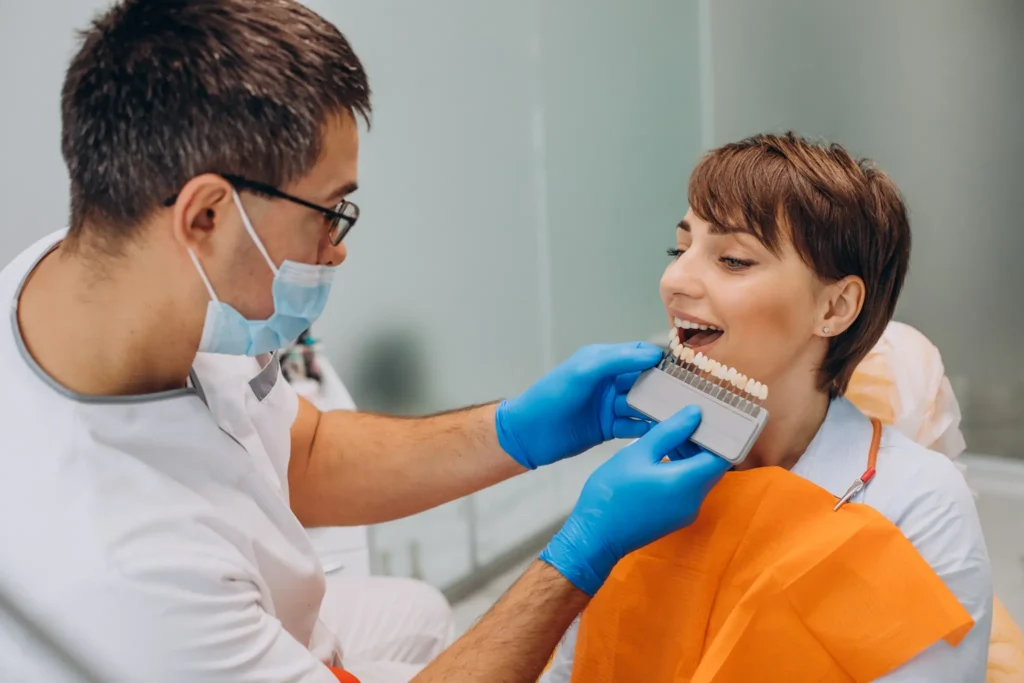
You don’t need a dental crisis to ask about yellow teeth, but there are signs that DIY whitening isn’t the answer.
It’s a good idea to see a dentist if:
- Home whitening hasn’t worked, despite your best efforts
- You’ve had tooth sensitivity before (this changes how whitening should be done)
- The stains look patchy or uneven, not uniformly yellow
- You want predictable, natural-looking results, not surprise stripes
- You’re unsure if teeth whitening will help at all
This is where my approach comes in.
Before recommending anything, I look at your stain type, enamel health, and sensitivity risk. That way, I focus on the best way to remove yellow stains from teeth, not trial-and-error that costs time and enamel.
If you’re wondering how to remove yellow stains from teeth without guessing, overdoing it, or trusting internet hacks, a little professional clarity goes a long way.
A consultation with me can quickly tell you:
- What will work
- What won’t
- and what’s actually worth your time (and money)
Because your teeth deserve facts, not experiments and definitely not lemon-and-baking-soda science. 😄
FAQ’s
How much does stained teeth treatment cost?
The cost of stained teeth treatment varies based on the type of stain and level of professional supervision. Whitening toothpastes cost less, while dentist-supervised whitening or cosmetic treatments cost more due to safety and effectiveness.
Is yellow stain on teeth permanent?
Most yellow tooth stains are not permanent. Surface stains caused by food, drink, or smoking usually respond well to professional whitening.
Can aged yellow teeth be whitened?
Yes. Aged yellow teeth can be whitened, although results depend on enamel thickness and the depth of staining. Older teeth may whiten more gradually.
What teeth stains cannot be removed?
Some intrinsic stains inside the tooth and stains affecting crowns, veneers, or fillings cannot be removed with whitening. These require alternative cosmetic treatments.
How fast can a dentist whiten teeth?
A dentist can often whiten teeth in a single in-clinic visit. Noticeable results are usually visible immediately after professional treatment.
Do whitening toothpastes really work?
Whitening toothpastes work only for mild surface stains. They do not change the natural tooth colour or remove deep stains.
Can baking soda remove stains safely?
Baking soda can remove surface stains occasionally, but frequent use damages enamel and increases sensitivity.
How long do teeth stay white after whitening?
Teeth stay white for several months or longer after whitening. Longevity depends on diet, smoking, oral hygiene, and maintenance treatments. For a better understanding about your teeth whitening results contact me now!
Dr. Prashanth Kanakamedala (BDS, MDS) is a Senior Dentist in Singapore with over 27 years of experience across the UK, Australia, and Singapore. Trusted by 8,500+ patients, he’s known for his gentle approach and dedication to helping every patient achieve a healthy, confident smile.