If you’ve heard scary stories about root canals… relax. When you understand how a root canal works, the fear disappears instantly. The procedure has a reputation it absolutely does not deserve.
Modern root canal treatment is routine, safe, and comfortable, and, believe it or not, it actually relieves pain, not causes it.
Think of this post as a friendly walkthrough of what actually happens inside your tooth, without the drama, fear, or dental jargon.
Key Takeaways
- A root canal removes infected or inflamed pulp from inside the tooth to save it.
- The steps of a root canal procedure include X-rays, numbing, creating a tiny opening, cleaning, disinfecting, and sealing the canals.
- With modern techniques, what happens during a root canal feels very similar to getting a filling.
A root canal is usually the best option to save your natural tooth and prevent worsening infection.
What Is a Root Canal Treatment?
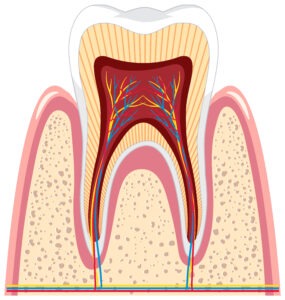
A Root Canal Treatment is a procedure where the infected or damaged pulp inside your tooth is removed, the space is cleaned and disinfected, and the tooth is sealed to stop the infection from spreading. This allows you to keep your natural tooth instead of needing an extraction.
To understand how a root canal works, you should first know that your tooth has three layers:
- Enamel – the strong protective outer shell
- Dentin – the sensitive middle layer
- Pulp – the soft centre that contains nerves and blood vessels
When the pulp becomes infected; usually due to deep decay, cracks, or trauma, it cannot heal on its own. A root canal removes the infection while keeping the rest of your tooth healthy and functional.
When Do You Need a Root Canal?
Your tooth usually sends a few SOS signals when you’re in need of a root canal.
Here are the most common:
- Persistent toothache
- Pain when chewing
- Sensitivity that lingers (especially to hot/cold)
- Gum swelling
- A small pimple-like bump on the gums
- Darkening of the tooth
- Facial swelling (in advanced cases)
Quick Scenario
If you’ve been chewing only on one side for a week because one tooth “feels angry,” your tooth is probably trying to tell you something.
When to Seek Urgent Care
Seek urgent dental attention if you notice:
- Severe swelling
- Fever
- Difficulty opening your mouth
If you’re noticing any of these signs, the safest next step is to book an appointment with me.
Further Reading: How to Know If You Need a Root Canal
Step-by-Step: How a Root Canal Actually Works
This is where the mystery finally disappears. No horror movie soundtrack, no dramatic plot twist; just a calm, clean, predictable process that explains how root canal treatment works in real life.
Understanding these steps is the best way to stop fearing what happens during a root canal.
1. Examination & X-Ray
I take a careful look at the tooth and capture a small X-ray to see what’s happening inside.
What you feel: Nothing unusual. It’s the dental version of checking Google Maps before starting the journey.
2. Local Anaesthesia
Your tooth and the surrounding area are fully numbed.
What you feel: A tiny pinch… and then absolutely nothing.
Most patients say, “Wait… is it already numb?”
Yes. Modern dentistry is magical like that.
3. Tiny Access Opening
A small opening is made on the top of the tooth to reach the pulp.
What you feel: Still nothing, though you may wonder why you were ever scared of this.
4. Cleaning & Shaping the Canals
This is where your tooth gets its deep-clean moment, the most important part of the root canal procedure.
I gently remove the infected tissue and shape the canals with very fine instruments.
With 27 years of experience and 10,000+ patients treated, this step is routine for me, like someone who’s cooked the same recipe a thousand times without burning it.
What you feel: Just vibrations. No pain, no drama.
5. Disinfection
We rinse the canals with antibacterial solutions to ensure every last bit of infection is gone.
What you feel: Nothing, except maybe relief that we’re closer to the finish line.
6. Filling the Canals
Once the canals are clean and dry, they’re filled with a biocompatible material so bacteria can’t sneak back in.
It’s basically your tooth saying: “Alright, no more unwanted guests.”
7. Temporary or Final Restoration
Depending on your tooth’s condition, you’ll get:
- A temporary filling,
- A permanent filling, or
- A scheduled crown appointment (the tooth’s version of upgrading to premium protection).
If one tiny tooth has been ruining your entire morning mood…It’s time to end the feud.
A gentle root canal can get that tooth behaving again; no drama, no suspense, just comfort.
Book your appointment whenever you’re free.
Does a Root Canal Hurt? (The Truth)
No, a root canal is not painful.
With modern local anaesthesia a root canal is performed to remove the source of pain and most of you feel only pressure or vibration (similar to a filling) rather than sharp pain.
When you know how a root canal works, you realise the procedure is designed to remove pain, not cause it.
I always tell my patients:
“I treat people, not just teeth.”
So if you’re nervous, don’t worry; I’ll talk you through everything in plain, simple English.
No dental jargon. No mystery terminology. No plot twists.
And honestly?
Most patients walk out saying:
“Wait… that’s it? I was stressed about this?”
How Long Does a Root Canal Take? What to Expect During Your Visit
Most root canals are surprisingly efficient, the kind of appointment where you mentally prepare for chaos, but everything ends up being calm and organised (very Singapore).
Typical treatment time:
- 30–60 minutes for most teeth
- Molars may take a little longer because they have more canals (they’re overachievers)
Will you need more than one visit?
Not always.
Many cases can be completed in a single visit, especially under Singapore clinical standards, where efficiency and precision go hand-in-hand.
But if the infection is severe or the canals need extra cleaning time, I may schedule a second visit; quality > speed.
What happens after the root canal?
You may come back for:
- A final filling (if a temporary one was placed)
- A crown, especially if the tooth was cracked, heavily decayed, or structurally weak
- A quick healing check in rare cases, just to ensure everything is settling beautifully
Think of it like fixing a house: the root canal repairs the foundation; the crown is the strong, stylish roof.
What Happens After the Procedure? Recovery & Care

Once the root canal is done, most patients sit up, blink twice, and say – “That’s it?”
Yes, that’s it.
Now let’s talk about what happens next.
What You May Feel (All Normal)
- Mild soreness for 1–2 days
- Tenderness when chewing
- Slight “bruised” feeling around the tooth
Your tooth has just had a deep clean; it’s allowed to be a little dramatic for a day or two.
How Long Does Pain Last?
Usually 24–48 hours.
Most patients manage just fine with over-the-counter pain relief.
If you needed a two-visit treatment, discomfort may last a touch longer; totally normal.
Do’s & Don’ts After a Root Canal
Do’s
✔ Chew on the other side for a few days (give your tooth some “me-time”)
✔ Take your prescribed or recommended pain medication
✔ Stick to softer foods for a day
✔ Come back for your final filling or crown; the tooth needs that finishing touch
Don’ts
✘ Don’t chew ice, hard candy, or anything that could star in an action movie
✘ Don’t skip your crown appointment if advised; uncrowned teeth can crack
✘ Don’t panic if you feel mild pressure or tenderness; that’s normal
✘ Don’t Google “root canal horror stories”… it’s never helpful
A Quick Recovery Timeline
Day 1:
Mild soreness; you’re already feeling better than before the procedure.
Day 2–3:
Tenderness reduces; chewing gets easier.
Day 4–7:
Most symptoms fade; the tooth feels “normal” again.
Long-term:
A well-done root canal has a 90–95% success rate.
With a proper crown, that tooth can last just as long as your other natural teeth.
“A root canal isn’t the villain; the infection is.
My job is simply to evict the troublemaker and let your tooth get back to living a peaceful life.”
If you’ve already had a root canal and need a follow-up or a crown appointment, you can quickly schedule one through my Appointment Page!
Root Canal vs. Extraction: Why Save the Tooth?
Let me put it simply: your natural tooth is premium, limited-edition, custom-made… and cannot be truly replaced once removed.
That’s why my approach is always preventive, long-term, and focused on preserving what you were born with.
Here’s why saving the tooth almost always wins:
1. Chewing Will Feel Normal Again
A natural tooth is perfectly designed for chewing forces.
Once it’s saved, you can go back to enjoying your meals without favouring one side or cutting everything into tiny, polite pieces.
2. Your Jawbone Stays Healthy
Tooth roots keep the bone stimulated and strong.
Remove the tooth → bone gradually shrinks → neighbouring teeth start shifting → more dental drama than anyone wants.
3. It’s Better for Long-Term Oral Stability
A saved tooth supports your bite, alignment, speech, and oral function.
Think of it as maintaining the foundation of your house; pulling a tooth is like removing a pillar and hoping everything still stands straight.
4. No Implants Here, We Protect What You Have
Since I don’t place implants, my focus is entirely on helping you keep your natural teeth for as long as possible.
A successful root canal is often the most predictable, stable, and tooth-friendly solution.
5. It’s Usually Less Complex Than Replacing a Missing Tooth
Treatment, healing, follow-ups; a root canal often involves less time and cost than the long journey of extraction + replacement options.
My philosophy is simple:
If we can save the tooth safely, we absolutely should.
Your natural teeth are always the best tools for the job, and my goal is to keep them working comfortably for the long run.
Expert Care Matters: Getting Your Root Canal Done Properly
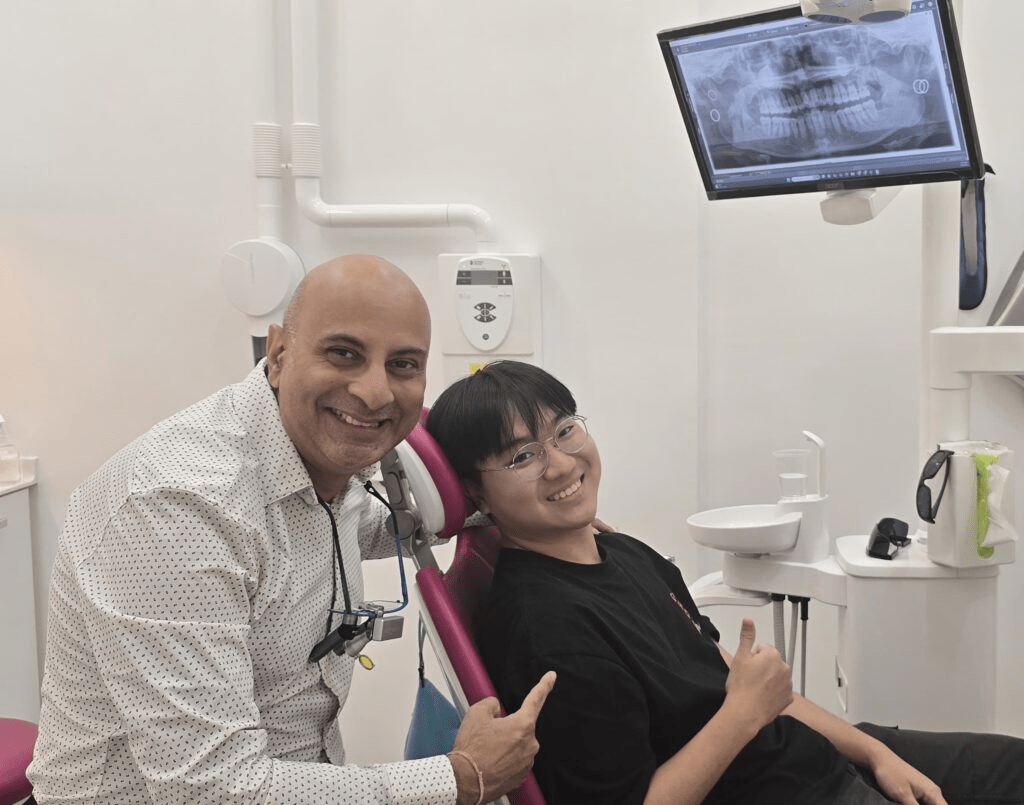
When it comes to root canals, experience genuinely matters.
I’ve spent 27+ years practising across the UK, Australia, and Singapore, helping thousands of patients understand how a root canal works and guiding them through treatment comfortably.
My approach is simple: comfort first, clarity always, and results you can trust.
With modern equipment, gentle techniques, and a habit of explaining things in human language (not “dental dictionary”), the entire process becomes predictable, safe, and surprisingly easy.
Patient snippet:
“Dr. Prashanth made the whole root canal feel smoother than my regular cleaning. I’m still shocked.”
Ready to Save Your Tooth (and Your Peace of Mind)?
If that one stubborn tooth has been stealing your focus, sleep, or chewing power… it doesn’t have to anymore.
A well-done root canal can stop the pain, save your natural tooth, and get you back to living normally, without the constant “what if” worry.
Your tooth will thank you. Your future self will too.
FAQs about Root Canal
How long will root canal teeth last?
A root canal treated tooth can last 10–20 years or longer with proper care. Most treated teeth last as long as natural teeth when protected with good hygiene and a well-fitted restoration.
Is a root canal painful?
No, a root canal is not painful because modern anaesthesia makes the procedure feel similar to a routine filling. Most patients find the experience far easier than expected.
What happens if you delay a root canal?
Delaying a root canal allows infection to spread, leading to swelling, severe pain, abscess formation, bone loss, and eventual tooth loss. Early treatment prevents complications.
If you’re currently experiencing symptoms, it’s safest to get assessed. You can quickly schedule an evaluation on my Appointment Page.
Do you need a crown after a root canal?
Most back teeth need a crown after a root canal because molars and premolars require protection from fracture. Front teeth may be restored with a filling if the structure is strong.
How successful are root canals?
Root canals have a 90–95% success rate when performed properly and restored with a good seal. It remains one of dentistry’s most reliable and predictable treatments.

Dr. Prashanth Kanakamedala (BDS, MDS) is a Senior Dentist in Singapore with over 27 years of experience across the UK, Australia, and Singapore. Trusted by 8,500+ patients, he’s known for his gentle approach and dedication to helping every patient achieve a healthy, confident smile.